
According to the definition by the National Center for Complementary and Integrative Health at NIH, “Reiki is a complementary health approach in which practitioners place their hands lightly on or just above a person, with the goal of directing energy to help facilitate the person’s own healing response. It is based on an Eastern belief in an energy that supports the body’s innate or natural healing abilities.”
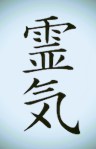
The name “Reiki” originates from Japanese REI (spirit) and KI (energy, life force). The Reiki technique utilizes spiritual, or universal, energy to assist the healing process. Healing can occur on physical, emotional, or spiritual levels. Reiki, as a modern healing method, was initiated at the beginning of the 20th century by Dr. Mikao Usui (1865 – 1926), a Japanese Buddhist monk.
To become a Reiki practitioner, one gets training from a Reiki master or teacher. There are several levels of Reiki training. The training includes learning specific information and receiving initiations or attunements. The purpose of attunements is to allow the future practitioner to conduct the energy of Reiki for healing.
Reiki treatments can be performed in person or at a distance. During in-person treatment, the practitioner places his or her hands in specific positions on or above the person’s body and allows Reiki energy to assist in the person’s healing. During distant treatment, the practitioner focuses on the person, using Reiki symbols and the person’s name (and picture), and allows Reiki to assist in healing.
During Reiki sessions, the person usually experiences relaxation and peacefulness. The treatments last 15-60 minutes. During the treatment, the practitioner does not diagnose the person, and does not perform any purposeful manipulations (addition or removal of energy) of the person’s energy field. The only intention of the practitioner during the treatment is to be a pure conduit of healing energy.
It is believed that during the treatment, the person’s body “draws” the necessary healing energy and distributes it according to its needs. Being open to receiving a treatment significantly affects the treatment efficiency, and this decision is made by the person not only consciously, but often subconsciously. This is why Reiki treatments cannot be imposed – the person has to agree to receive a Reiki treatment and allow healing to take place.
There are many lineages of Reiki. Reiki Jin Kei Do is a lineage focusing on compassion and wisdom. It involves additional training in Buddhist meditation techniques. Anastasia has been trained in Reiki Jin Kei Do lineage.
Contact Anastasia for a free introductory distant Reiki session.
______________________
Articles on Reiki:
NIH: https://www.nccih.nih.gov/health/reiki
Web MD: https://www.webmd.com/pain-management/reiki-overview
Medical News Today: https://www.medicalnewstoday.com/articles/308772Cleveland Clinic: https://health.clevelandclinic.org/reiki
 ALLOW HEALING